Step 1
Authorization and Documentation Review
Ownership structure is confirmed, authorization documentation is obtained, and any applicable HOA or municipal permit requirement is identified and pursued before site work is scheduled.
Loading...
Service Detail
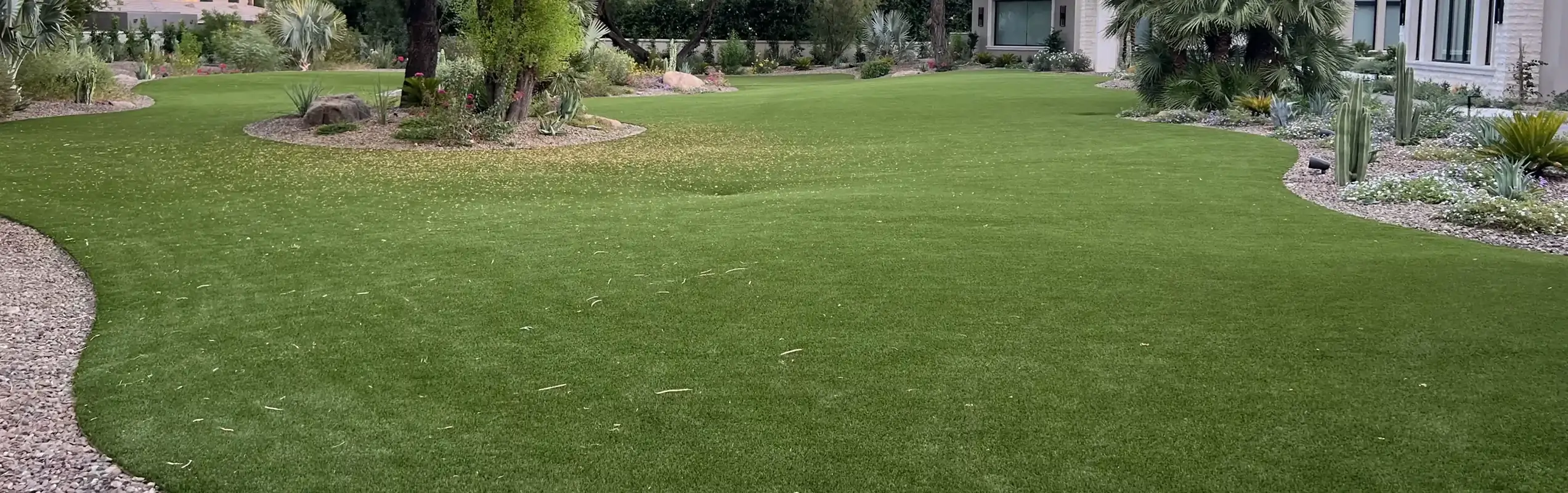
Commercial artificial turf installation engineered for Bay Area Houston commercial properties — I-45 corridor, NASA Road 1 frontage, and multi-tenant site documentation.
Main Introduction
Commercial artificial turf installation in the Bay Area Houston market operates under different requirements than residential work. The fiber specification is higher — commercial positions routinely see foot traffic, vehicle proximity, and weather exposure that would degrade a residential-grade product within 2 to 3 years. The documentation requirements are more involved — commercial landlords, HOA management companies, and municipal permitting offices all have submission standards that vary by property and jurisdiction. And the scheduling constraints are more rigid — a hotel entry plaza or a medical office frontage cannot tolerate a mid-project stop because material was ordered incorrectly or authorization was not obtained.
Artificial Grass of League City approaches commercial installations with the same methodical planning sequence used on complex residential projects, scaled for commercial-grade requirements. The first step for every commercial project is a property-ownership determination: who has authority to authorize the exterior modification? Owner-occupied commercial properties need the owner's authorization. Multi-tenant properties need the landlord's written approval. Commercial condominiums need the association's approval letter. Getting that confirmation at intake — not after site work has begun — is the single most effective way to prevent a costly project interruption.
Fiber and infill specifications for commercial installations in the League City service area account for the specific environmental exposures at each site: road-proximity particulate deposition for I-45 and NASA Road 1 corridor properties, salt-air humidity exposure for bayfront and bayou-adjacent properties in League City and Webster, and industrial-corridor particulate for commercial properties in Pasadena, South Houston, and Stafford. A commercial installation that uses the correct fiber and infill spec for its actual exposure environment will perform measurably longer than one built to a generic commercial standard.
What Is Included
A complete commercial artificial turf installation scope includes authorization and documentation preparation, site measurement and drainage assessment, base preparation with documented compaction, commercial-grade fiber installation with seam and edge engineering, infill distribution and surface grooming, and closeout with the full commercial install file.
Documentation preparation for commercial projects covers the authorization path (owner, landlord, or association), any applicable municipal permit, and the HOA or property management company's exterior modification approval. These documents are obtained during the planning phase and are part of the project file.
Base preparation for commercial sites uses a higher-compaction specification than residential: 95% Proctor density for sites within 50 feet of high-traffic roadways, to account for road-vibration-induced settlement. Compaction readings from three test points across the installation area are recorded in the project file before turf installation begins.
Process Steps
Step 1
Ownership structure is confirmed, authorization documentation is obtained, and any applicable HOA or municipal permit requirement is identified and pursued before site work is scheduled.
Step 2
The site visit documents road proximity, environmental exposure (particulate, salt-air), drainage behavior, access constraints, and the fiber and infill specifications appropriate for the property's actual operating environment.
Step 3
Existing surface is addressed, grade lines are set, aggregate base is placed and compacted to the applicable specification, and compaction readings are recorded at three test points before installation begins.
Step 4
Fiber is installed to commercial-grade seam, edge, and infill specifications appropriate for the traffic volume, environmental exposure, and visual-presentation requirements of the specific property position.
Step 5
The completed installation is reviewed with the property owner or manager. The commercial install file — authorization documents, compaction readings, product spec, maintenance protocol — is delivered at closeout.
Use Cases
Commercial artificial turf is used across the Bay Area Houston market in entry plazas, parking-lot islands and medians, building frontage, rooftop amenity areas, retail common areas, and institutional grounds. The fiber and base specifications vary significantly by use position, and Artificial Grass of League City specifies each project based on the actual use position and environmental exposure rather than a single commercial standard.
High-visibility positions with regular foot traffic and high weather exposure. Fiber specification emphasizes traffic recovery — the ability of the fiber blade to return to upright orientation after compression — and UV stability appropriate for the property's orientation and any industrial or coastal environmental exposure.
Positions subject to tire proximity, oil residue, and road particulate. Fiber color selection avoids shades that highlight road dust accumulation. Infill uses coated sand or crumb rubber with documented particulate resistance. Edge design accounts for vehicle proximity and concrete curb interfaces.
Elevated positions with high UV exposure, wind loading, and structural substrate constraints. Base design is adapted for the structural limitations of the substrate — no deep grading possible. Drainage paths route water to existing drain points rather than to perimeter infiltration.
Shared-use positions with variable traffic patterns and HOA or institutional facility management oversight. Documentation requirements often match or exceed residential HOA standards. Fiber specifications address both traffic recovery and institutional appearance standards.
Why Choose
The differentiating factor in commercial artificial turf installation is not fiber quality in isolation — it is the combination of correct fiber spec for the specific use position, documented base compaction appropriate for the traffic load, and the authorization and documentation management that prevents the project from stopping mid-installation because a landlord or association approval was not obtained.
Artificial Grass of League City manages authorization documentation as a project deliverable, not as a pre-start checklist item that gets delegated to the property owner. The authorization documentation is pursued at intake, tracked through the approval cycle, and confirmed before the installation date is set. That sequence protects the property owner and the contractor from the most common and most costly commercial project interruption.
The commercial install file delivered at project close — authorization documents, compaction readings, product spec, environmental-exposure-specific maintenance protocol — provides the property owner with a verifiable record of the installation that is useful for property lease documentation, insurance carriers, and future property management reviews.
Pricing Factors
Commercial installation pricing is built project-by-project based on the authorization complexity, fiber and infill specification, base compaction requirement, and scheduling constraints documented during the site assessment. Properties with complex authorization paths, elevated environmental exposure specs, or tight scheduling windows carry higher planning and material costs than standard commercial installations. The cost components are defined line by line during the planning review.
Service Area Coverage
Commercial artificial turf installation is available throughout the League City service area: Webster (I-45 and NASA Road 1 corridor), Pasadena (Ship Channel industrial adjacent), South Houston (US-90 and I-45 frontage), Stafford (Murphy Road and South Main corridor), Sugar Land (US-59 and First Colony Town Center), and League City (South Shore Blvd, NASA Road 1 extension, and master-planned commercial zones). Multi-property portfolios can request phased scheduling organized by authorization-completion date and access window.
Related Services
Frequently Asked Questions
For owner-occupied properties, the owner's authorization. For landlord-tenant properties, written landlord approval. For commercial condominiums, the association's approval letter. These documents are collected during intake before the site visit is scheduled.
Minimum 80-ounce face weight with a W-blade cross-section for high-traffic positions. W-blade fiber has the highest post-compression recovery rate of standard commercial fiber profiles. The face weight and fiber count are documented in the project spec.
Yes. Sites within 50 feet of high-traffic roadways use a 95% Proctor compaction density rather than the standard 90%, to account for road-vibration-induced settlement in the base aggregate over the first 3 years. Compaction readings are recorded at three test points and included in the project file.
Yes. Work-day and work-hour restrictions are noted in the project plan at scheduling. Base preparation and installation days are arranged to fit within the preferred window, including weekend-only and early-morning scheduling.
The maintenance protocol varies by environmental exposure. Road-adjacent properties receive a power-rinse schedule (60-day for industrial-adjacent, 90-day for standard commercial). The protocol is documented in the commercial install file at closeout.
Yes. Webster, Pasadena, South Houston, Stafford, Sugar Land, Missouri City, Rosenberg, and League City commercial properties are within the primary service area.
Final CTA
Submit the form with service type, property address, and timeline details. You can also call directly for scheduling support.
Call